
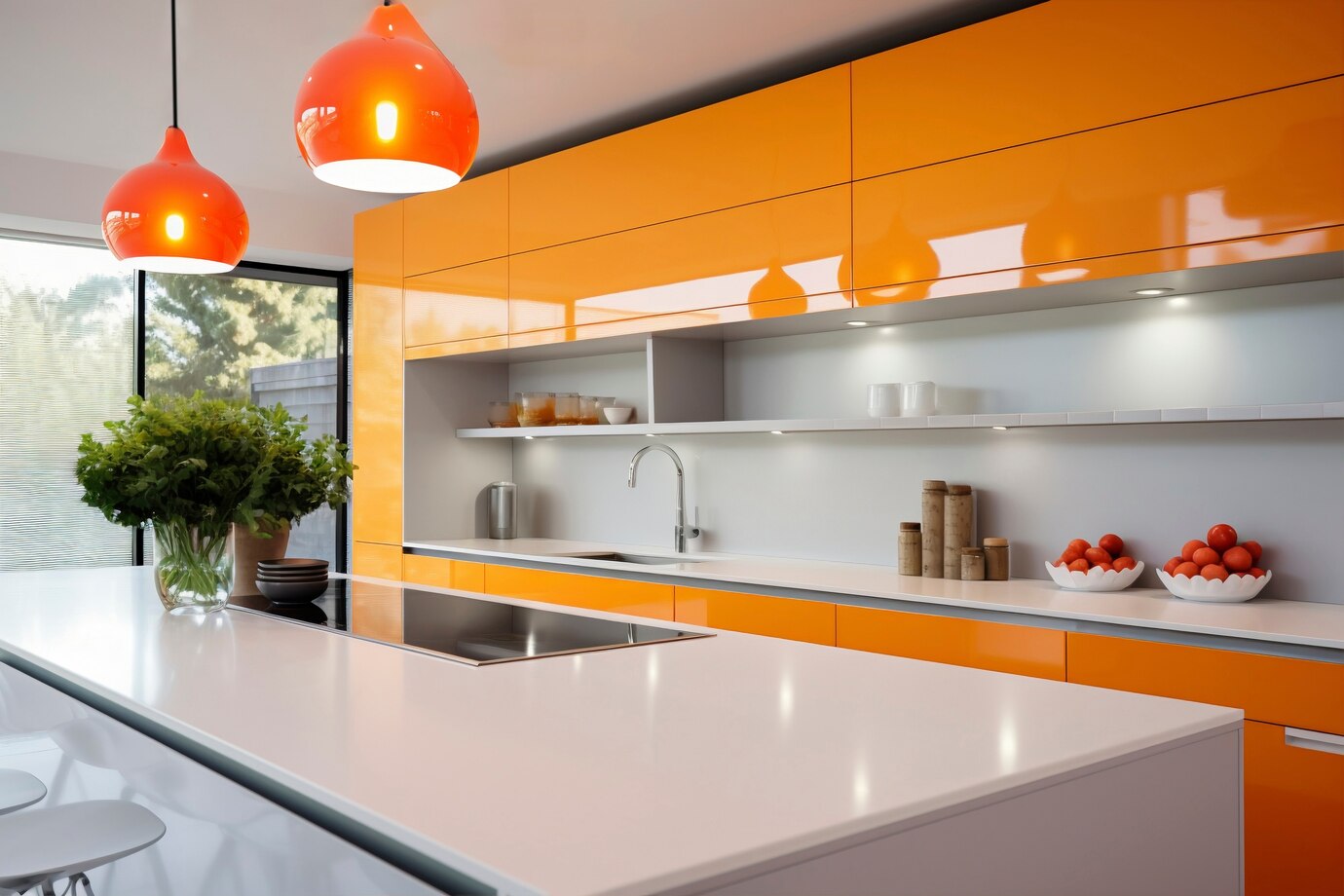
New countertops are the single change most Jacksonville homeowners notice first — and the one they touch every day. But the “right” surface here isn’t the same as in Denver or Chicago. Our humidity, heat, intense sun, and salt air off the Atlantic all push on a countertop in ways a generic online guide never mentions. This is a straight-talk, local comparison of the three surfaces we install most — engineered quartz, granite, and quartzite — with honest 2026 installed cost ranges for the Jacksonville market and clear guidance on which one fits your kitchen, your budget, and the way you actually cook.
The three surfaces Jacksonville kitchens are choosing in 2026
Ninety percent of the countertops going into Jacksonville kitchens today are one of three materials. Each is a genuinely good choice — the goal is matching the material to your home, not chasing whatever is trendy this year.
Engineered quartz — the low-maintenance favorite
Quartz is a manufactured surface: roughly 90% ground natural quartz bound with resin and pigment. Because it’s engineered, it comes in consistent colors and patterns — including convincing marble looks — with no slab-to-slab surprises. The big advantage in a humid climate like ours is that quartz is non-porous: it never needs sealing, it won’t harbor moisture or mold, and it shrugs off wine, coffee, and citrus. The trade-off is heat and sun. The resin binder can scorch under a hot pan, so quartz always wants a trivet, and prolonged direct UV can fade it over time — which is why standard indoor quartz is not the pick for a sun-drenched window run or an open lanai unless it’s a product specifically rated for exterior use.
Granite — natural stone that takes the heat
Granite is 100% natural stone, quarried and cut into slabs, so every piece is one of a kind. For Jacksonville cooks who put hot pots down without thinking, granite’s real heat tolerance is a genuine perk, and it’s UV-stable, so it holds its color in bright, sunny kitchens. Being natural stone, it’s porous and should be sealed periodically — a quick job that keeps humidity, hard-water spots, and spills from soaking in. Granite gives you the depth and movement of real stone at a friendlier price than exotic quartzite, which is why it remains the value-natural-stone workhorse in Northeast Florida.
Quartzite — the premium performer (and the outdoor-kitchen champ)
Don’t confuse quartzite (natural stone) with quartz (engineered). Quartzite is a hard natural stone with the look of marble but far more durability — it resists scratching exceptionally well and is UV-stable. That combination makes it the standout for two very Jacksonville situations: a showpiece island you want to last decades, and a covered outdoor or pool-house kitchen, where its resistance to sun and weather beats indoor quartz. Like granite, it’s natural and benefits from sealing. It sits at the top of the price range, but for homeowners who want natural stone that performs outdoors and in, it’s worth the look.
2026 Jacksonville countertop cost ranges (installed)
Prices below reflect Florida/Jacksonville installed pricing for 2026 — meaning material, fabrication, templating, a basic eased edge, one sink cutout, and professional installation. Natural stone includes initial sealing. Numbers move with slab grade, thickness (2cm vs 3cm), edge profile, seam count, and how many cutouts you need.
| Material | Installed cost / sq ft (2026) | Best for |
|---|---|---|
| Granite — entry to mid | ~$50–$95 | Value natural stone, high-heat cooks, sunny kitchens |
| Granite — exotic slabs | ~$95–$200+ | Statement islands, rare colors |
| Engineered quartz — entry | ~$60–$85 | Low-maintenance indoor kitchens, marble looks |
| Engineered quartz — premium | ~$85–$140 | Designer colors, waterfall edges |
| Quartzite | ~$90–$200 | Premium durability, covered outdoor kitchens |
What a whole kitchen typically runs
For an average 45-square-foot Jacksonville kitchen, the countertop portion of the project usually falls into these bands in 2026:
- Budget build: about $2,500–$4,200 (entry granite or quartz, standard edge)
- Mid-range: about $4,200–$7,000 (premium quartz or mid-grade granite, upgraded edge)
- High-end: $8,000–$16,000 and up (exotic granite or quartzite, waterfall edges, large islands)
What Jacksonville’s climate does to a countertop
This is where a local guide earns its keep. A few Northeast Florida realities that should shape your choice:
Humidity and mold
Our year-round humidity doesn’t damage stone, but it punishes gaps. The countertop itself is rarely the problem — it’s the seam at the sink, the caulk line at the backsplash, and the cabinet box underneath. Non-porous quartz gives you one less thing to seal, while granite and quartzite need their seal kept up. Whatever you pick, the install quality around water sources matters more than the stone’s brand name.
Sun, UV, and open-concept light
Many Jacksonville kitchens are bright, with big windows or a sliding-door wall to the lanai. Natural stone (granite, quartzite) holds color under that light indefinitely. Standard indoor quartz can fade with years of direct, prolonged UV, so for a wall of glass or an outdoor run, natural stone is the safer long-term bet.
Outdoor and pool-house kitchens
Summer kitchens are everywhere here — Nocatee, Ponte Vedra, Fleming Island, and Mandarin riverfront homes especially. For a covered outdoor kitchen exposed to heat and filtered sun, quartzite or granite is the move; indoor quartz belongs inside unless it’s specifically an exterior-rated product.
Salt air near the beaches
Homes in Jacksonville Beach, Atlantic Beach, and Ponte Vedra deal with salt air that’s tough on metal. The stone won’t corrode, but the faucet, sink, and cabinet hardware around it will age faster — worth choosing quality fixtures when you invest in a new top.
How to choose — a quick decision guide
- Want the least maintenance, indoors: engineered quartz. No sealing, wipes clean, huge color range.
- Cook hard and set down hot pans: granite or quartzite — real heat tolerance.
- Building a covered outdoor or pool-house kitchen: quartzite or granite for UV and weather.
- Want the marble look without marble’s fragility: quartzite (natural) or a marble-look quartz (engineered), depending on whether you’ll keep up with sealing.
- Tight budget, still want stone: entry-grade granite is the value pick in Jacksonville right now.
Countertops are one piece — get the whole kitchen right
New countertops shine brightest when the surfaces around them are pulled together. If your cabinet boxes are sound, pairing new counters with cabinet painting and refinishing is one of the best-value updates in remodeling — a transformed kitchen without the cost of tearing everything out. Planning something bigger? Our Jacksonville kitchen remodeling service handles layout, cabinets, counters, and flooring as one coordinated project, and we bring the same approach to bathroom remodeling where vanity tops face the same humidity questions. We work throughout the area, from Mandarin and Deerwood to the Beaches and Clay County.
Why homeowners call New Empire for countertops
Because we install countertops as part of real kitchen and bath projects — not as a drop-and-go slab sale — we sequence the work correctly: template after cabinets are set, coordinate the plumbing disconnect and reconnect, seal natural stone on install, and clean up so your kitchen is usable again fast. We’ll walk your slab options with Jacksonville’s climate in mind, give you a line-item quote on a clear scope, and stand behind the work. No invented showroom promises — just an honest local crew and a phone that a real person answers: (904) 820-5573.
Frequently asked questions
How much do new kitchen countertops cost in Jacksonville in 2026?
For a typical 45-square-foot kitchen, installed countertops usually land between about $2,500 and $7,000 for a budget-to-mid-range build, and $8,000+ for exotic natural stone. Per square foot installed, granite runs roughly $50–$95 (exotic higher), quartz about $60–$140, and quartzite around $90–$200. Value fabricators advertise material-plus-install starting near $30–$40 per square foot; full-service pricing with premium slabs runs higher.
Which countertop holds up best in Florida humidity?
All three handle our humidity well once installed right. Non-porous quartz never needs sealing; granite and quartzite are natural stone and should be sealed on a schedule. The bigger humidity factor is proper sealing at the sink and backsplash, not the stone itself.
Can I put countertops in a covered outdoor or pool-house kitchen?
Yes — but choose material carefully. Standard indoor quartz can fade in prolonged direct sun; natural stone like quartzite and granite is UV-stable and better suited to covered summer kitchens, lanais, and pool houses when sealed and maintained.
Do these countertops need sealing?
Quartz doesn’t (it’s non-porous). Granite and quartzite benefit from periodic sealing, usually about once a year. A quick water-drop test tells you when: if water beads, you’re good; if it darkens the stone, it’s time to reseal.
Which is more heat- and scratch-resistant?
Granite and quartzite tolerate heat better and you can briefly set a hot pot on them; quartzite is exceptionally scratch-resistant. Quartz resists everyday scratches and stains beautifully but can scorch, so always use a trivet with quartz.
Should I replace countertops or refinish cabinets first?
If your cabinet boxes are solid, doing both together — refinished cabinets plus new counters — is the highest-impact, best-value update short of a full remodel, with one crew and a coordinated palette. New Empire handles cabinet refinishing, countertops, and full kitchen remodels in Jacksonville, so it’s sequenced right the first time.
New Empire Remodeling · Kitchen & bathroom remodeling, cabinet refinishing, countertops, flooring, and painting in Jacksonville, FL and surrounding communities · ☎ (904) 820-5573