By the New Empire Remodeling team · Jacksonville, FL
An exterior paint job that would last a decade in a mild climate can start chalking, fading and mildewing in three or four years on a Jacksonville home. Our combination of relentless UV, months of high humidity, daily summer thunderstorms, and salt air near the coast is genuinely hard on a coating — it’s one of the toughest paint environments in the country. The homeowners who get twelve to fifteen years out of a paint job here aren’t lucky; they picked the right product for the substrate and, just as importantly, prepped the surface correctly before a drop of paint went on.
This guide covers the best exterior paint for Florida homes the way a remodeler thinks about it: why paint fails so fast here, when to use 100% acrylic versus elastomeric, which sheen to put where, what to use on stucco versus Hardie board versus wood, how much prep really matters, and what an exterior repaint actually costs in Jacksonville in 2026. Whether you own a block-and-stucco home in Mandarin, a Hardie-sided build in Nocatee, or a wood-trimmed cottage in Riverside, the same climate rules decide how long your paint lasts.
Why Florida is so hard on exterior paint
Understanding what’s attacking your paint makes every other decision easier. Four forces do the damage here. Ultraviolet radiation is intense and nearly year-round; it breaks down binders and bleaches pigment, which is why dark colors fade and south- and west-facing walls always wear first. Humidity keeps surfaces damp and feeds mildew — those grey-green streaks on a north wall are biological growth, not dirt, and they’ll come back unless the paint itself resists them. Thermal and moisture cycling — a wall baking at midday, then cooled and wetted by an afternoon storm — makes the substrate expand and contract constantly, so a rigid coating cracks while a flexible one survives. And near the water, salt air accelerates everything, corroding fasteners and metal trim and driving moisture into any porous surface. A Florida-rated paint is engineered specifically to resist this set of stresses; a generic “exterior” paint often isn’t.
100% acrylic latex vs. elastomeric — the core decision
Two product families do the heavy lifting on Florida exteriors, and choosing between them correctly matters more than the brand on the can.
Premium 100% acrylic latex — the right pick for most homes
A quality 100% acrylic exterior paint is the default recommendation for Jacksonville. The all-acrylic binder stays flexible through our temperature and humidity swings, so it moves with the wall instead of cracking; better lines carry UV-resistant pigment technology for strong color retention and mildew-resistant additives to slow biological growth. It breathes enough to let incidental moisture escape rather than trapping it behind the film, and it holds color far longer than the alternatives. Industry-standard products in this class include lines such as Sherwin-Williams Duration and Emerald and Benjamin Moore Aura — any true premium 100% acrylic exterior in a good color will outperform a bargain paint by years here.
Elastomeric — powerful, but only in the right place
Elastomeric is a thick, rubbery, high-build coating that bridges hairline cracks and creates a genuinely waterproof skin over masonry. On bare or never-properly-sealed stucco and concrete block, that waterproofing is a real advantage in a wet climate. But it’s a specialist product, not a default: it’s much thicker and less breathable, so used in the wrong place it can trap moisture behind it and cause worse problems, and it gives up some color retention compared to acrylic. The rule of thumb Florida painters follow: use elastomeric for first-time sealing of raw stucco or block where waterproofing is the goal; on a sound existing coating, repaint with premium acrylic for better long-term color and breathability. It does not belong on wood or fiber cement.
Which sheen goes where
Sheen is a durability decision as much as a look. Flatter finishes hide surface imperfections and are traditional on stucco bodies; higher-gloss finishes are tougher and easier to wash, which is what you want on the parts that get touched and weathered hardest. A reliable Florida spec is flat or matte on stucco bodies (hides the texture and any patching), satin or low-lustre on siding and fiber-cement bodies (the most versatile all-round choice — sheds dirt, resists mildew, still forgiving of imperfections), semi-gloss on trim, doors and shutters (maximum durability and washability where hands and weather hit), and gloss reserved for small accent features only. Going too glossy on a big wall highlights every flaw; going too flat on trim gives up scrubbability.
Substrate by substrate — what Jacksonville homes are actually made of
The single biggest mistake is treating every exterior the same. The right paint depends on what’s under it.
Stucco and concrete block
Very common on Jacksonville homes. If the stucco is bare or was never properly sealed and you want maximum water protection, an elastomeric coating (products such as Sherwin-Williams Loxon XP) seals hairline cracks and waterproofs the wall. On a repaint over a sound existing coating, a premium 100% acrylic gives better color life and lets the wall breathe. Either way, chalky or previously unpainted masonry needs to be cleaned and, where needed, sealed with a masonry primer first.
Hardie board / fiber cement
Increasingly the standard on newer Jacksonville and St. Johns County builds. Fiber cement is dimensionally stable and takes paint well, but it needs a paint with enough flexibility and bond strength to match the board and stay tight at the joints — a premium 100% acrylic exterior (Duration is a common choice, or Aura where color longevity is the priority) in satin is the sweet spot. Keep the caulk joints maintained; that’s where fiber-cement paint jobs usually fail first.
Wood siding and trim
Wood is the most demanding substrate in our climate because it moves with moisture and is prone to rot. Use a premium acrylic over a quality primer on any bare wood, and — this is non-negotiable — repair or replace any rotten wood before painting, because paint over rot just hides a growing problem. Trim and fascia take the most weather, so a durable semi-gloss acrylic there pays off.
Vinyl siding
Vinyl can be painted, but only with a paint rated for it and only in “vinyl-safe” colors — going darker than the original can absorb enough heat to warp the siding. Products with vinyl-safe color technology exist specifically for this; standard exterior paint in a dark color is a mistake on vinyl.
Brick and masonry accents
Painted brick needs a breathable coating so trapped moisture can escape; a quality acrylic masonry paint over the right primer works, while some homeowners prefer a mineral or breathable masonry-specific product. The key is breathability — sealing brick too tightly can spall the face over time.
Metal — railings, fascia, doors
Standard exterior acrylic doesn’t bond well to bare metal. Metal railings, gutters and metal doors need a direct-to-metal (DTM) coating, and near the coast that corrosion resistance matters even more.
Color and UV — pick light, pick smart
Color isn’t just aesthetics in Florida; it’s durability. UV bleaches pigment, and darker colors fade noticeably faster than lighter ones — a deep navy or charcoal on a sun-blasted west wall will look tired years before a soft greige on the same wall. Colors with a higher Light Reflectance Value (roughly LRV 55 and up) hold their appearance longest and keep the wall cooler, which also eases the thermal cycling. If you love a dark accent, use it on a shaded elevation, a front door, or trim rather than a full south- or west-facing field. And if you’re in a deed-restricted community — common across Nocatee, Ponte Vedra and much of St. Johns County — check the approved palette before you fall in love with a color.
Prep beats product — every time
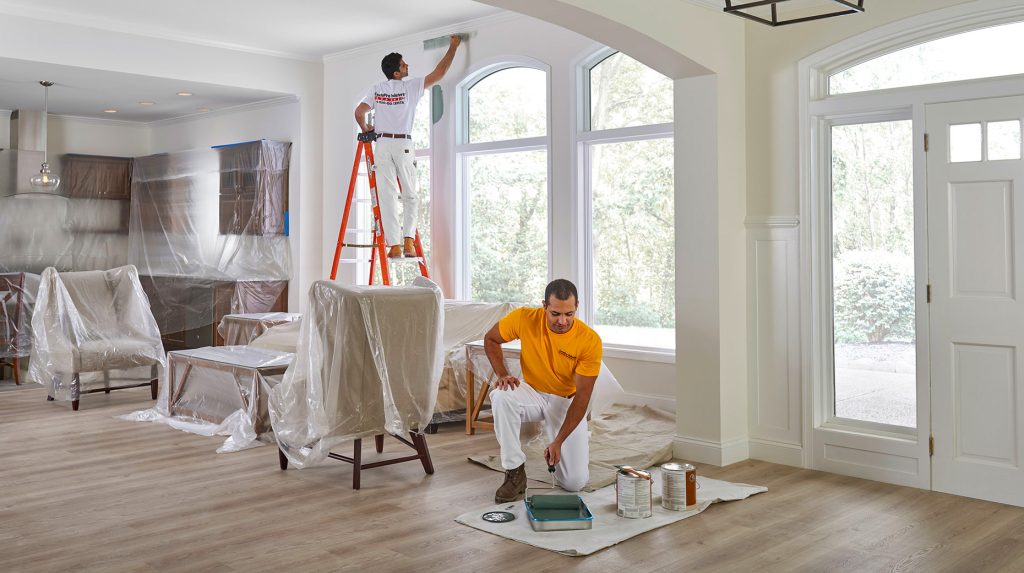
The hard truth of Florida exteriors: the best premium acrylic on the market will fail in a few years over poor prep, and a mid-grade paint over excellent prep will outlast it. Where the coating meets the wall is where jobs live or die. Proper preparation on a Jacksonville home means pressure washing to strip dirt, mildew, salt residue and any loose or peeling paint; removing chalk and sealing chalky stucco so the new paint can actually grip; repairing cracks and replacing failed caulk at every joint, window and trim seam; repairing wood rot before coating rather than painting over it; priming bare wood, raw stucco and all spot repairs; and applying two full topcoats at the proper film thickness rather than stretching one thin coat. Skip any of these and the clock on your paint job starts ticking early.
When and how to paint in Florida’s weather
Timing is part of the job here. The surface has to be fully dry before painting — coating a wall that’s still damp from a morning storm or a pressure wash traps moisture and ruins adhesion. Our daily summer afternoon storms make the window tight, so crews work around the forecast, paint earlier in the day, and give walls time to dry after rain or washing. High humidity also slows cure and, on a surface that isn’t fully dry, invites the very mildew you’re trying to prevent. This is a big reason a rushed or off-season job underperforms — the weather has to cooperate, and a good crew plans for it rather than fighting it.
2026 exterior painting costs in Jacksonville
The figures below reflect current Jacksonville and Florida pricing for a professional exterior repaint in 2026. Your real number depends on the size and height of the home, the siding material, how much prep and repair the surface needs, and the paint tier you choose. As a local benchmark, a typical single-story Jacksonville exterior repaint runs in the $3,585–$6,205 range, with most jobs landing around $4,240–$5,550, or roughly $2–$4 per square foot of surface.
| Factor | Typical 2026 cost | Notes |
|---|---|---|
| Per square foot (surface) | $1.50 – $5 / sq ft | Jacksonville jobs typically $2–$4/sq ft |
| Single-story house (whole exterior) | $3,585 – $6,205 | Most land near $4,240–$5,550 |
| Two-story house | $3,000 – $5,000+ | Height/access adds labor |
| Three-story house | $5,000 – $7,000+ | Scaffolding/lifts increase cost |
| Stucco | $2 – $5 / sq ft | Elastomeric on bare stucco costs more |
| Wood siding | $1.50 – $5 / sq ft | Add rot repair + priming |
| Brick / masonry | $2.50 – $5 / sq ft | Needs breathable coating + primer |
| Vinyl / aluminum | $1.50 – $4.50 / sq ft | Vinyl-safe colors only on vinyl |
Two cost notes worth planning for. First, prep and repair aren’t optional line items — concrete or stucco prep alone can add roughly $500–$2,000 depending on area and condition, and it’s the part of the estimate you should never cut. Second, paint quality is a small share of the total but a big share of the lifespan: premium exterior paint runs about $50–$100+ per gallon versus $20–$40 for economy, and on a $5,000 job the upgrade to a true premium acrylic adds only a few hundred dollars while adding years of life. It’s the cheapest durability you can buy.
How often will you repaint in Jacksonville?
With a premium acrylic, correct sheen, light-to-mid color and — the deciding factor — thorough prep, a Jacksonville exterior can hold up well for roughly ten to fifteen years, with trim and sun-facing walls needing attention sooner. Cut corners on prep or product and you’re back on a ladder in three to five. Coastal homes at the Beaches and Ponte Vedra run on the shorter end because salt air is unforgiving. The takeaway isn’t a magic paint — it’s that the repaint interval is set at prep time, not on the paint aisle.
Getting it done right in Jacksonville
Before you hire, ask an exterior painter how they’ll prep your specific surface — how they handle chalky stucco, whether they repair wood rot and re-caulk before coating, how many coats they apply, and how they work around our afternoon storms. The answers separate a crew that understands Florida from one that sprays a single coat and leaves. Confirm the company is licensed and insured in Florida, uses a premium exterior product matched to your substrate, and stands behind the workmanship, not just the paint’s warranty.
At New Empire Remodeling, exterior painting is part of how we care for and remodel Jacksonville homes, so the prep, the substrate-correct product choice, and the trim, rot and caulk repairs are handled by one accountable crew. You can see our full painting approach on the Jacksonville painting services page. If a repaint is part of a bigger refresh, our kitchen remodeling and bathroom remodeling pages show how it fits into a whole-home update, and homeowners updating cabinets often start with our cabinet painting and refinishing service indoors.
Planning an exterior repaint and want it done for Florida’s climate? Get a free, no-pressure estimate.
Or request your free estimate online — we’ll look at your siding, your sun exposure and your budget and give you a straight recommendation.
Frequently asked questions
What is the best exterior paint for a Florida home?
For most Jacksonville homes, a premium 100% acrylic latex exterior paint with UV-resistant pigments and mildew-resistant additives is the best choice — it stays flexible through Florida’s heat and humidity swings, resists fading and mildew, and lets walls breathe. Elastomeric coatings are better only in a specific case: sealing bare or previously unsealed stucco and masonry where waterproofing is the priority. Whatever you choose, thorough surface prep matters more than the brand.
Should I use elastomeric or acrylic paint on my stucco house?
Use elastomeric on bare or never-properly-sealed stucco and concrete block, where its thick, crack-bridging, waterproof film is a real advantage in Florida’s wet climate. On a repaint over a sound existing coating, a premium 100% acrylic is usually the better call — it holds color longer, breathes better, and won’t risk trapping moisture the way a heavy elastomeric can if it’s applied over the wrong surface. A local painter should assess the stucco’s condition before deciding.
How long does exterior paint last in Jacksonville?
With a premium acrylic, the right sheen, a light-to-mid color and thorough prep, a Jacksonville exterior can look good for about ten to fifteen years, with trim and sun-facing walls needing touch-ups sooner. Poor prep or economy paint can cut that to three to five years. Coastal homes near the Beaches and Ponte Vedra typically fall on the shorter end because salt air accelerates wear. The prep quality, more than the paint itself, sets how long it lasts.
Why does exterior paint fail so fast in Florida?
Four forces do the damage: intense year-round UV that fades pigment and breaks down binders, high humidity that feeds mildew, constant thermal and moisture cycling that cracks rigid coatings, and salt air near the coast that corrodes and drives in moisture. A generic exterior paint isn’t engineered for that combination. Florida-rated premium acrylics with UV and mildew resistance, applied over proper prep, are what stand up to it.
What color exterior paint lasts longest in the Florida sun?
Lighter and mid-tone colors last longest because they reflect more UV and fade far less than dark colors, which also absorb more heat and worsen thermal cycling. Colors with a higher Light Reflectance Value (roughly LRV 55 and above) keep their appearance longest and keep the wall cooler. Save deep, dramatic colors for shaded elevations, front doors or trim rather than large south- or west-facing walls — and in deed-restricted communities, check the approved palette first.
How much does it cost to paint the exterior of a house in Jacksonville?
In 2026, a professional exterior repaint in Jacksonville typically runs about $2–$4 per square foot of surface, with a single-story home usually landing between roughly $3,585 and $6,205, and most jobs near $4,240–$5,550. Two- and three-story homes cost more due to height and access. Siding type, the amount of prep and repair needed, and paint quality all move the number — and prep and repair should never be cut to save money.
Your next step
The exterior paint that lasts in Jacksonville is the one chosen for our climate and applied over a surface that’s been properly prepped — a premium acrylic in the right sheen for the substrate, a light-to-mid color that survives the sun, and honest prep that fixes the wall before it’s painted. Match the product to your siding, don’t cut the prep, and get a real local estimate before you commit. If you’d like a straight read on the best exterior paint for your Florida home and what it will take to make it last, the New Empire team is a phone call away.
Ready for an exterior that holds up to Florida?
New Empire Remodeling · Kitchen & bathroom remodeling, painting and flooring in Jacksonville, FL · (904) 820-5573